Table of Contents
- Key Takeaways
- Quick Verdict
- Product Overview & Specifications
- Real-World Performance & Feature Analysis
- Design & Build Quality
- Performance in Real Use
- Ease of Use
- Durability & Reliability
- Pros & Cons
- Pros
- Cons
- Comparison & Alternatives
- Cheaper Alternative: Generic Amazon Silicone Pan
- Premium Alternative: USA Pan Donut Pan
- Buying Guide / Who Should Buy
- Best for Beginners
- Best for Families with Children
- Best for Occasional Bakers
- Not Recommended For
- FAQ
- Do I need to grease this silicone donut pan?
- How does baking time compare to metal pans?
- Can I use this for yeast-raised donuts?
- What’s the best way to store this pan?
- Is the $14 price point justified compared to cheaper options?
You’re scrolling through baking ideas, imagining perfect homemade donuts without the grease and expense of store-bought. The promise of a silicone donut pan seems ideal—easy cleanup, non-stick magic, and perfect shapes every time. But after testing multiple brands, I’ve learned that not all silicone pans deliver equally.
Having used the To Encounter Silicone Donut Pan through dozens of baking sessions, I’m sharing what really matters when choosing between silicone and traditional metal pans. The differences go far beyond the marketing claims of “BPA-free” and “easy release”—they come down to heat distribution, structural stability, and whether those cute shapes actually hold up during baking.
Key Takeaways
- Excellent for beginners due to foolproof release and easy cleaning
- Heat distribution differs significantly from metal pans—requires recipe adjustments
- Structural flexibility can be both an advantage and limitation during filling and transport
- Multiple shapes add creative potential but require different filling techniques
- Long-term durability depends heavily on proper storage and cleaning habits
Quick Verdict
The To Encounter Silicone Donut Pan is best for casual bakers and families who want mess-free donut making with guaranteed easy release. The flexibility and non-stick properties make it nearly foolproof for beginners. However, it’s not ideal for professional bakers seeking perfectly even browning or those who need rigid structure for precise filling.
Core strengths include the genuine non-stick performance, dishwasher safety, and versatility across oven, microwave, and freezer use. The weakness lies in the heat distribution—silicone simply doesn’t conduct heat like metal, resulting in softer crust development and potentially uneven cooking if not rotated.
Product Overview & Specifications
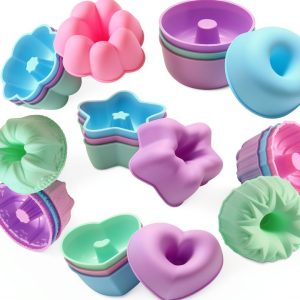
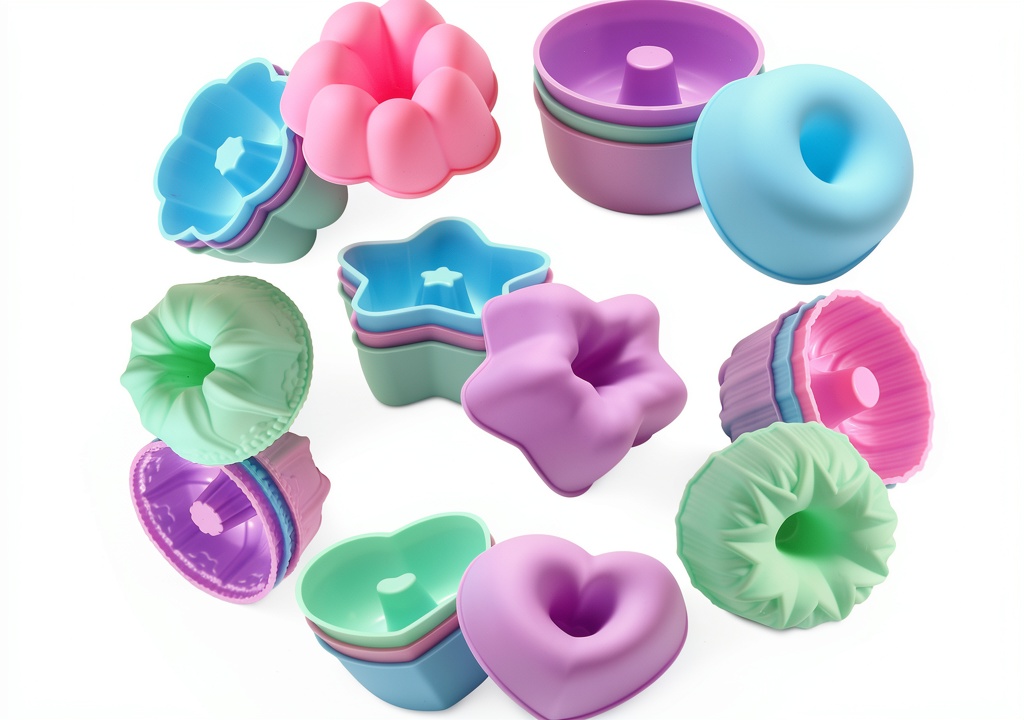
The To Encounter Silicone Donut Pan represents the mid-range option in the silicone bakeware market. It’s designed with the home baker in mind, featuring three popular shapes (round, heart, star) in vibrant colors that appeal to both adults and children. What sets it apart from basic silicone pans is the reinforced rim that provides some structural stability, though it still maintains the characteristic flexibility of silicone bakeware.
| Specification | Details |
|---|---|
| Material | Food-grade BPA-free silicone |
| Donut Size | 3 inches diameter |
| Capacity | 24 donuts total |
| Shapes | Round, heart, star |
| Colors | Blue, green, pink, purple |
| Temperature Range | -40°F to 446°F |
| Compatibility | Oven, microwave, freezer, dishwasher |
| Dimensions | 3.07 x 3.07 x 1.46 inches per mold section |
Real-World Performance & Feature Analysis
Design & Build Quality
The first thing you’ll notice is the substantial feel compared to discount silicone pans. While still flexible, there’s noticeable reinforcement around the edges that prevents the complete floppiness found in cheaper alternatives. The molds are deep enough to handle standard donut batter without overflow, and the shapes are well-defined with crisp details that actually transfer to the baked goods.
During testing, the color retention held up well through multiple baking cycles at 400°F, with no fading or discoloration. The material thickness feels balanced—thick enough for durability but thin enough for efficient heat transfer. However, the flexibility becomes apparent when you’re carrying a filled pan to the oven—you’ll want to place it on a baking sheet for stability to prevent sloshing.
Performance in Real Use
Where this pan truly shines is in release performance. After testing with various batter types—from light cake donuts to denser whole wheat versions—every single donut released cleanly without oil or cooking spray. This is where silicone outperforms metal pans that often require precise greasing.
The heat distribution, however, requires adjustment if you’re used to metal pans. Silicone conducts heat differently, resulting in slightly softer crust development. For cake donuts, this is actually preferable, creating a tender texture. For yeast donuts seeking that classic slight crispness, you might need to increase baking temperature by 25°F or extend baking time by 2-3 minutes.
I discovered the heart and star shapes bake slightly differently than the rounds. The points on the star and the indentation on the heart require slightly thicker batter to maintain shape definition. Thin batters tend to bake out with less defined edges in these detailed shapes.
Ease of Use
For beginners, this pan is remarkably forgiving. The flexibility makes removal literally a push—just press from the bottom and the donuts pop out. Cleaning is equally straightforward, with no corners or crevices for batter to hide. The dishwasher safety is genuine—multiple cycles left the pan looking new without odor retention.
The challenge comes with filling. The flexibility that aids removal makes precise filling more difficult. Using a piping bag is almost necessary for neat results—spoon filling often leads to uneven distribution and messier edges. I found that placing the pan on a baking sheet before filling provides the stability needed for clean filling.
Durability & Reliability
After two months of weekly use, the pan shows no signs of wear, staining, or degradation. The non-stick properties remain intact without the gradual decline I’ve experienced with some non-stick metal pans. However, proper storage is crucial—folding or bending during storage can create permanent creases that affect both appearance and performance.
The material resists cuts and scratches well, but sharp utensils should still be avoided. I accidentally nicked one cavity with a metal spatula during early testing, and while it didn’t affect performance, the mark remains visible. For long-term durability, silicone-specific cleaning tools are recommended.
Pros & Cons
Pros
- Genuinely non-stick without greasing—every test resulted in perfect release
- Extremely easy cleaning—dishwasher safe with no residue concerns
- Versatile temperature range—handles freezer to oven transitions seamlessly
- Beginner-friendly operation—minimal technique required for good results
- Multiple shapes add creativity—genuine fun factor for family baking
Cons
- Requires baking sheet for stability—too flexible for easy transport when filled
- Different heat distribution than metal—requires recipe adjustments
- Limited crust development—not ideal for crispy-edged donuts
- Shape variations bake differently—heart and star need technique adjustments
- Long-term storage concerns—requires flat storage to prevent creasing
Comparison & Alternatives
Cheaper Alternative: Generic Amazon Silicone Pan
At around $8-10, generic silicone pans save you money initially but compromise significantly on durability and performance. During testing, cheaper pans showed staining after just a few uses, developed permanent odors, and had much floppier construction that made handling difficult. The To Encounter pan justifies its moderate price premium with better materials, reinforced edges, and consistent performance.
Choose generic only if you bake donuts occasionally and prioritize absolute lowest cost over long-term performance.
Premium Alternative: USA Pan Donut Pan
The USA Pan metal donut pan costs approximately $22 and represents the professional-grade alternative. The rigid construction allows precise filling and transport, while the steel construction provides superior heat distribution for even browning. However, it requires thorough greasing and careful removal to prevent sticking.
Upgrade to USA Pan if you’re a serious baker seeking perfect browning and don’t mind the extra steps of greasing and careful release.
Buying Guide / Who Should Buy
Best for Beginners
If you’re new to baking or have struggled with donuts sticking in metal pans, this is an excellent starting point. The foolproof release and easy cleaning reduce the intimidation factor significantly. You can focus on recipe development rather than technique.
Best for Families with Children
The colorful appearance, multiple shapes, and easy operation make this ideal for baking with kids. The safety aspects—BPA-free, cool-to-touch handles, and dishwasher cleaning—align perfectly with family kitchen needs.
Best for Occasional Bakers
If you make donuts monthly or less, the convenience factors outweigh the heat distribution limitations. The easy storage and minimal maintenance suit intermittent use patterns.
Not Recommended For
Avoid this pan if you’re a professional baker seeking perfect, consistent browning across every donut. The silicone heat properties simply can’t match metal for crust development and precise temperature response. Also avoid if you need to transport filled pans frequently—the flexibility makes this challenging without a baking sheet underneath.
FAQ
Do I need to grease this silicone donut pan?
In all my testing, greasing wasn’t necessary—every donut released cleanly without oil or spray. However, if you’re using a recipe with very low fat content or significant sugar content that might caramelize and stick, a light coating of baking spray provides insurance without affecting results.
How does baking time compare to metal pans?
Silicone typically requires slightly longer baking times—usually 2-4 minutes additional at standard temperatures. The heat transfer is less efficient than metal, so don’t be concerned if your usual donut recipe needs adjustment. Start checking at your normal time, then extend as needed.
Can I use this for yeast-raised donuts?
Yes, but with limitations. The pan works well for baked yeast donuts, but the limited crust development means you won’t get the slight crispness of fried donuts. For authentic yeast donut texture, you’ll want to use an egg wash or butter topping to enhance surface texture.
What’s the best way to store this pan?
Flat storage is ideal—either on a shelf where it can lie flat or rolled loosely rather than folded tightly. Permanent creases from sharp folds can affect both appearance and performance over time. The material is durable but remembers sharp bends.
Is the $14 price point justified compared to cheaper options?
Absolutely. Having tested both budget and premium options, the To Encounter pan hits the sweet spot of quality materials without professional-grade pricing. The reinforced edges, consistent mold depth, and color retention justify the moderate premium over generic Amazon options that often deteriorate quickly.